Prop trading, automated. Tactics & insights
Guides on passing challenges, managing risk and getting the most out of PraxAI. New posts regularly.
How to Make Money in Forex with AI: The Honest Answer
Searching how to make money in forex with AI usually means expecting a model that predicts the market. AI does not do that. This guide covers what it does, where it helps, where it hurts, and the realistic path for a prop firm trader, with every cost labeled as a cost and no return promised.
Read postIs AI Forex Trading Profitable? What Decides the Answer (It Is Not the AI)
Is AI forex trading profitable? Not by itself, and there is no single answer, because AI forex trading is not a single thing. What decides the result is the process around the tool: risk per trade, hard limits, execution cost, survival through losing streaks and consistency over months. This guide ranks those variables, shows what vendor numbers hide, and explains how to measure your own result without a single promised return.
Read postCan AI Trade Forex for Me? What the Software Does, and What Stays Yours
Can AI trade forex for me? Yes, software can place trades in your account without you clicking. No, that is not the same as AI earning money for you, and no honest tool claims it. The decisions that determine the result stay in your hands, and this guide shows exactly which ones.
Read postAI Forex Trading for Beginners: Start With a Demo, Not a Robot
AI forex trading for beginners is not buying a robot and switching it on. It is learning enough about pips, lots, risk per trade, drawdown and prop firm rules to know what the software is doing, and the first step is a demo account, not a purchase.
Read postWhat Is a Prop Firm? A Plain-English Definition for New Traders
What is a prop firm? A proprietary trading firm gives traders access to its capital, or to a simulated account backed by it, in exchange for a share of the profits, usually after an evaluation. Here is the full picture before you pay a fee.
Read postAre Prop Firms Legit? How to Tell the Ones That Pay From the Ones That Do Not
Are prop firms legit? Most are real businesses that pay traders who follow the rules, and a minority are not. The difference is visible before you pay, if you know what to check.
Read postHow to Get a Funded Forex Account: The Five Steps From Demo to First Payout
How to get a funded forex account when you have never done it: prove a written process on demo, choose the evaluation model and account size your risk supports, pass the evaluation without changing the plan, survive the first weeks of funding, and meet the payout conditions. Every step, with what is commonly required and what usually goes wrong.
Read postProp Firm vs Trading Your Own Money: Six Ways the Two Routes Differ
Prop firm vs trading your own money is the decision that comes before every other prop firm question. A prop firm lets you trade a large account for a small fee and takes part of the profit and some of the freedom; your own capital gives you all the profit and all the freedom, and puts your savings at risk. Here is the comparison by axis, with a worked example.
Read postProp Firm Glossary 2026: 32 Evaluation, Drawdown and Payout Terms Defined
This prop firm glossary defines 32 terms, from evaluation and trailing drawdown to profit split, simulated funded account, set file, and VPS, each in one or two complete sentences you can read on their own.
Read postHow Do Prop Firms Make Money? Fees, Resets and the Profit Split
How do prop firms make money? Most combine an evaluation fee, repeat fees from traders who try again, and a share of the profits of funded traders. The mix varies a lot by firm, and knowing which mix you are buying into is what lets you choose well.
Read postPhase 1 vs Phase 2 Prop Firm Challenge: Same Rules, Different Trap
In a phase 1 vs phase 2 prop firm challenge the target shrinks but the loss limits do not. Phase 2 is a different psychological problem with familiar rules, and it has its own failure rate. Here is what changes, what stays fixed, and why the best phase 2 plan is usually the phase 1 plan untouched.
Read postProp Firms for Canadian Traders: Payouts, KYC, Platforms and Time Zones
Most forex and futures prop firms accept residents of Canada. The real differences for prop firms for Canadian traders are payout currency, payout method, platform access, and time zone, not eligibility.
Read postBest Futures Prop Firms 2026: A Map of the Structures, Not a Ranking
Every list of the best futures prop firms 2026 hands you scores out of ten, and every one of them is stale within a quarter. What survives is the structure: how the evaluation is shaped, how drawdown is measured, how money comes out, and who is allowed to automate.
Read postProp Firms That Accept US Traders: Pick the Market Before the Firm
Searching for prop firms that accept US traders returns lists. What almost nobody explains is why the list is short on one side of the market and long on the other, and why an American trader is really choosing a market rather than a firm.
Read postChatGPT Trading: What a Language Model Helps With, and What It Does Not Do
ChatGPT trading is now a normal part of how people prepare for a prop firm evaluation, and most of the damage comes from one confusion. A language model is genuinely useful for a short list of tasks and unsuited to another list, and traders lose challenge fees by treating the second list like the first.
Read postAI Agents and Funded Accounts: What an Agent Should and Should Not Be Allowed to Do
AI agent trading is the fastest growing question in this niche and almost nobody answers it properly. Here is what an agent actually is in software, what it can genuinely do for a funded account, and why on borrowed capital the value is constraint rather than autonomy.
Read postHFT EA and Prop Firms: What Those "Pass in One Day" Products Actually Do
Search for an HFT EA prop firm solution and you will find products promising an approved account in twenty minutes. Some of them deliver exactly that. This is what they do under the hood, why the firm does not react for weeks, and why the thing that breaks is the payout you paid to reach.
Read postAutomated Trading on FTMO: The Pre-Flight Checklist
Most people researching automated trading FTMO have already decided to automate. What they need is the order of operations that keeps a challenge fee from dying to a rule nobody explained. Six checks, in the order you actually execute them, each one answered yes or no tonight.
Read postPassing and Keeping Are Two Different Games, and Almost Nobody Switches
Only 1 to 3 percent of funded traders keep the account long term, and the reason is structural. How to keep a funded account is a different problem from how to pass a challenge, with different rules and opposite incentives, and most traders play the second game with the strategy that won the first.
Read postProp Firm Payout Proof: How to Audit a Result Before You Believe It
Most prop firm payout proof is a picture of a number. This is the evidence ladder an auditor would use, from a loose screenshot at the bottom to a per account record with drawdown and third party verification at the top, plus the questions that make a seller show which rung they are standing on.
Read postCan AI Pass a Prop Firm Challenge? The Direct Answer, and the Three Things the Question Hides
Can AI pass a prop firm challenge? Yes, and it happens often enough to be unremarkable. The useful part of the answer is what sits underneath it: what most vendors mean by AI, why passing is the easier half of the job, and why a general purpose chat model cannot place a single order on your account.
Read postThe Best EA for FTMO Is the One That Passes With Room Left Over
Most people shopping for the best EA for FTMO compare returns, buy the biggest number, and lose the challenge fee anyway. The number that decides an evaluation is the distance left between the worst moment of the run and the rule. Here is how to measure that on any EA before you pay.
Read postCan You Use an EA on FTMO? Why Only One Answer Counts
Can you use an EA on FTMO? The answer worth having is not a yes or a no from a blog post. It is a dated reply from the firm's own support team, for your account type and your platform, saved somewhere you can find it again. This is the ten minute method for getting one.
Read postThe Real Bill Behind Instant Funding vs FTMO Challenge
You have both tabs open and one card on file. This is the instant funding vs FTMO challenge decision priced out attempt by attempt, including the break even point most people never calculate before they pay.
Read postSignals, Bots and Copy Trading Are Not the Same Bet on a Prop Account
Signals vs trading bots vs copy trading is not a taste test. One route sells you a decision and leaves the execution to you, one puts your own rules in code, and one is commonly restricted by prop firms for reasons that have nothing to do with performance.
Read postWhat AI Can and Cannot Do Once Your Account Is Funded
Once the money is real the job changes: no target left to chase, only rules that can end the account. The honest split for AI risk management on a funded account, what belongs to a model, what belongs to code, and what stays with you.
Read postYour Challenge Bot Is the Wrong Bot for an Instant Funding Account
On an instant funding account the money is real from the first order, and the settings that carried you through an evaluation can quietly work against you. Here is what the search for the best trading bot for instant funding is really asking, and the checklist to run before you connect one.
Read postIs Any Trading Bot Actually AI? Here Is How to Check Before You Pay
One seller means a neural network, the next means a rules engine from 2019, the third means a chat window, and every one of them is selling an AI trading bot in 2026. Here is the test that tells them apart, from a company that starts by naming the parts of its own software that are not AI at all.
Read postSix Questions That Separate a Serious Trading Bot From a Sales Page
We sell automation for prop firm accounts, which is exactly why this is a checklist and not a ranking. How to choose a prop firm trading bot in six questions, with the answers that should reassure you and the ones that should make you close the tab.
Read postBefore You Pay for a Bot, Ask to See the Losing Week
A seller with a good month will show you the good month. Almost everything that decides whether a robot survives a prop account is in the bad one. These are the trading bot red flags worth a second look, and the request that surfaces most of them in an afternoon.
Read postYour EA Does Not Know What Time It Is
A robot cannot feel that the same trade costs three times more at 3am than at 3pm. How the best trading sessions for an EA get chosen, why rollover is the classic 24 hour trap, and what running around the clock really costs on gold.
Read postFutures or forex prop firm? Compare the structure, not the fee
Futures vs forex prop firm is not a price question. The contract you trade, the drawdown model, the session structure and the automation policy are all different, and those are what decide which side you can actually pass.
Read postAn 80 percent win rate can still lose the account
Every metric on your dashboard answers a different question, and the one most traders read first answers the least useful one. Profit factor, win rate and drawdown explained with a worked example, plus the six questions to ask before you believe anyone's screenshot.
Read postThe Account Size You Can Afford Is Not the One You Should Buy
Stretching for the biggest account you can afford is the most expensive habit in this niche. On FTMO 10k vs 100k, which account you buy changes the dollar value of every mistake, not the difficulty of the test.
Read postEA Backtest vs Live Results: Why the Numbers Never Match (From an EA Vendor)
Every robot sales page leans on a backtest. We sell an EA, and we are still telling you not to trust one, ours included. EA backtest vs live results diverge for reasons you can name in advance, and the red flags that expose an overfit curve are visible before you pay a single challenge fee.
Read postInstant Funding Prop Firms Remove the Evaluation, Not the Risk
Instant funding prop firms sell you a skipped queue, not a skipped rulebook. The label removes less than most traders assume, the risk limits usually get tighter instead of looser, and the only comparison that decides anything is total cost to your first payout.
Read postProp Firm Psychology and the Four Patterns That End Evaluations
Your evaluation is a psychological test wearing the costume of a technical one. Prop firm psychology breaks traders for a structural reason: the money is not yours, the deadline is not yours, and the rule punishes the mistake the second it happens. Four patterns end most accounts, and every one of them is beaten by a decision made before you sit down.
Read postFundedNext vs FundingPips: Which One Fits How You Trade
Most FundedNext vs FundingPips comparisons crown a winner in the first sentence. That is the wrong question. Read both as products instead: phase structure, drawdown mechanics, consistency clause, automation policy. Then pick the one that fits the way you already trade, and stop paying for the same lesson twice.
Read postPosition Sizing for a Prop Firm Challenge: The Only Variable You Fully Control
Your entry gets the credit, but position sizing decides whether a prop firm account survives the evaluation. Here is the full risk-per-trade system, a worked example with round numbers, and the ceiling your firm's limits quietly set on every trade.
Read postThe Cheapest Prop Firm Challenge Is Rarely the Cheapest: Run This Math Before You Pay
Hunting for the cheapest prop firm is the right instinct with the wrong math. The sticker price buys one attempt, and discounted rulebooks are usually priced for more than one. Here is how to work out what a challenge really costs before you pay.
Read postThe5ers vs FTMO: The Real Differences Before You Pay
The5ers vs FTMO is not a ranking question, it is a fit question. Compare the two as evaluation products: phase structure, time horizon, automation policy, and what choosing wrong really costs in repeated fees.
Read postThe Drawdown Recovery Plan Nobody Writes Until They Need It
Most traders write their drawdown recovery plan after the account is already gone. Here is the version worth writing on day one: the asymmetric math, the size ladder, the daily brake, and the line where you stop everything.
Read postApex vs Topstep: Compare the Rules, Not the Coupon Codes
Apex vs Topstep is not a price question. The two firms sell different evaluation models, treat drawdown differently, and reward different trading styles. Here is what actually separates them, and what to confirm before you pay for either.
Read postProp Firms That Allow EAs in 2026: The Field Guide, Organized by Posture
Every list of prop firms that allow EAs starts rotting the day it is published. This is the 2026 field guide built the durable way instead, around the three postures a firm can take toward automation: written permission with conditions, permission with restricted EA classes, and the futures market, where the only honest answer is to ask the firm. Plus the exact questions to put to support before you spend a challenge fee.
Read postCopy Trading Prop Firm Accounts: Mechanics and the Rules Line
Every copy trading prop firm question is really two questions: how the copier works, and whose trades it is copying. The mechanics decide your fills and your sizing. The source of the trades decides whether the setup is tolerated scaling or the clause that voids the account at review. This is both halves, hedged the way prop firm rules have to be.
Read postFundingPips vs FTMO: Compare the Structure, Not the Numbers
Every FundingPips vs FTMO comparison you can find is a table of numbers that were true on the day somebody typed them. This one compares the structure of the two offers instead, because structure moves slowly while figures rot, and it gives you the checklist to take to both firms' own terms pages before you spend another challenge fee.
Read postNews Trading Prop Firm Rules: Blackout Windows, Filters and Fills
There is no single news trading prop firm rule. There is a family of restrictions that look nothing like each other: a blackout window around a release, a ban on holding through it, a profit clause that only surfaces at review, and sometimes nothing at all. This is the mechanics of all four, why the danger sits in execution rather than direction, and how a news filter is actually configured in an EA.
Read postThe FTMO Payout, Explained: Split, Schedule and What Voids It
Most traders learn how the FTMO payout works after they are funded, which is the expensive order to learn it in. The split is the part everyone quotes and the least important. The schedule, the reset of your profit baseline and the conduct rules around the withdrawal are what actually decide whether money reaches your bank.
Read postHow to Install an EA on MT5 for a Prop Firm Account, Step by Step
Knowing how to install an EA on MT5 takes about five minutes. Installing it so it survives a prop firm rulebook takes a little longer, and that is where accounts are won or lost. This is the full sequence: the folder, the set file, the inputs worth checking, the tests that prove it works and the reason your laptop is the wrong machine to run it on.
Read postThe Best Prop Firms 2026: A Chooser's Guide for Forex and Futures
Every list of the best prop firms 2026 crowns a different winner, and most of them are ranking affiliate commissions, not firms. This guide does something more useful: the six questions that actually separate firms, what each major forex and futures firm is commonly known for, and the cost arithmetic that picks the right one for how you trade.
Read postAI vs Manual Trading for Prop Firms: What Each Side Actually Wins
The AI vs manual trading debate usually runs on identity: engineers trust software, discretionary traders trust the screen. Inside a prop firm challenge the question gets concrete, because a rulebook with a daily loss line grades both sides the same way. Here is what automation genuinely does better, where a human still wins, and the honest hybrid most funded traders end up running.
Read postHow to Pass the FundedNext Challenge Without Feeding It Resets
Most advice on how to pass the FundedNext challenge starts with a strategy. The account dies somewhere else: a daily loss line crossed in one bad session, a rule that differed between account types, a phase two traded with phase one aggression. This is the rule-first plan instead, with worked examples you can copy into a journal.
Read postHow Much Do Funded Traders Make? The Honest Math Nobody Posts
Search how much do funded traders make and you get screenshots and course ads. There is no audited public dataset, so this article does the only honest thing: it shows the four variables that decide the number, runs worked examples with invented figures, and prices in the statistic the screenshots leave out.
Read post
How to Pass Apex Evaluation: The Rules That Decide the Run
Most answers to how to pass Apex evaluation quote numbers with no date attached. This is the structure instead: how a trailing threshold moves and where it can lock, what contract caps and the session close demand, how consistency expectations grade the shape of your profit, and what to verify on Apex's own site before a second attempt.
Read post
How to Build a Prop Firm Risk Management Plan Before Your First Trade
A prop firm risk management plan is not a preference about how aggressive you like to be. It is arithmetic derived from the daily loss limit and the maximum drawdown your specific account carries. Here is how to run that arithmetic, with worked examples, and why the plan has to be written down before the first trade rather than improvised at the worst moment.
Read post
How to Pass The5ers Challenge: The 2026 Rule Map
Most answers to how to pass The5ers challenge quote somebody else's account. This is the rule map instead: which product family you bought, why the loss limits and not the profit target should set your sizing, how The5ers drawdown is commonly structured, and what to do after a failed attempt.
Read post
Gold Trading Bot for Prop Firms: Why XAUUSD Punishes Bad Automation
Gold is one of the first instruments prop traders automate, and one of the least forgiving. Why a gold trading bot for prop firms fails on units, sizing and spread long before it fails on signals, with a worked example of the stop distance mistake that stops an EA out over and over.
Read post
The Best AI Trading Bot for Prop Firms in 2026
Everyone selling automation claims to be the best AI trading bot for prop firms. Almost nobody publishes the criteria you could judge them by. Here are the seven that decide whether a system survives an evaluation, how the major firms treat automation, and a one-week test you can run before risking a challenge fee.
Read post
How to Pass the FTMO Challenge in 2026: The Rule Map That Actually Decides It
Evaluations are rarely lost on the profit target. They are lost on the loss limits. This guide covers how to pass the FTMO challenge by planning backwards from the daily loss and overall drawdown, pacing both phases, choosing between Swing and Standard, and knowing where automation fits. Every rule below is described as FTMO has classically structured it, so verify current terms on ftmo.com.
Read post
AI Trading Bots for Prop Firms in 2026: What Automation Really Does, and What It Cannot
Marketing for AI trading in 2026 promises everything short of a printed payout. The truth is narrower and more useful. An AI trading bot for prop firms earns its keep in risk enforcement and position sizing, not in magic signals, and every big firm treats automation differently. This guide separates what automation actually does in an evaluation from what no software can promise.
Read post
How to Pass a FundingPips Challenge: The Full Rule Map
Prop firm evaluations are usually decided by the loss rules, not the profit target. Here is the map of rule categories a FundingPips run is built from, why the rules belong to the product you bought rather than to the firm name, and how to plan the pace backwards from the risk cap.
Read post
How to Pass an E8 Markets Challenge: A Method, Not a Number
Passing an E8 Markets evaluation has less to do with the profit target than with the limits around it. Here is a method for reading the rulebook, sizing from the daily limit, and running the account so the rules are never the thing deciding your outcome.
Read post
How to Pass an Alpha Capital Challenge: Read the Rulebook First
Most traders buy an Alpha Capital challenge and read the rules after the first bad day. This guide flips that order: which document actually governs your account, how to turn each rule category into numbers you control, and which mistakes end accounts long before the profit target is in reach.
Read post
How to Pass The Funded Trader Challenge: A Structural Guide
The Funded Trader evaluation is a written specification before it is a trading account. Here is what to check before you pay, how to budget risk phase by phase, and why the funded stage is a different game with a different scoreboard.
Read post
How to Approach a Topstep Combine: The Futures Rules Forex Traders Miss
Coming to Topstep from forex, the dashboard looks familiar and almost nothing underneath it is. Here is how a futures evaluation is structured, why the drawdown rule deserves more planning than the profit target, and which forex habits break in the first sessions.
Read post
Instant Funding vs Evaluation: What You Actually Buy in Each Model
Skipping the challenge sounds like skipping the hard part. It is not. Here is what you buy in each model, where the real cost shows up, and how to pick the door that fits where you actually stand.
Read post
FundedNext Account Types Explained: How to Choose Before You Pay
Choosing a FundedNext account is not choosing a price. It is choosing the rulebook you will live inside for the next few months. Here are the axes that actually separate one model from another, what each one does to a strategy that trades automatically, and how to decide before the fee leaves your account.
Read post
Apex Trader Funding Payout Rules: What Separates Profitable From Paid
Reaching the profit target on an Apex Trader Funding account and getting money out of it are two different tests. This is how the payout side is structured, why so many first requests stall on the shape of the profit rather than the size of it, and how to run the account with the withdrawal in mind from the first session.
Read post
FTMO Swing vs Standard Account: The Practical Difference for Anyone Who Holds Positions
The account type box at checkout looks like a detail next to account size and phase count. It is not. It decides when your positions are allowed to exist, and that rules out entire strategies before you place a single trade. Here is the structure of the choice, how to approach each rule it touches, and how to decide without guessing.
Read post
The Rulebook Checklist to Run Before You Buy a Challenge You Plan to Automate
If a robot is going to trade the account, the rulebook is its specification document. Here are the six question groups to work through on the firm's own terms page before you pay for a challenge, and the setting each answer changes on the software you are about to install.
Read postCan You Use an EA on FundedNext in 2026?
FundedNext permits EAs on most of its models, with a clear ban list and model-specific conditions. Here is what a bot must respect to keep the account reviewable.
Read postApex Trader Funding Rules Every Bot Must Respect
Apex is a futures firm on Tradovate and Rithmic, so MT5 bots cannot connect. These rules decide whether an automated account survives: trailing threshold, session close, news windows, consistency and contract scaling.
Read post
How to Run an EA on TradeLocker, DXtrade, Match Trader and cTrader
Many prop firms have moved onto TradeLocker, DXtrade, Match Trader and cTrader, which leaves an MT4 expert advisor with nowhere to run. Here are the three real ways to automate on those platforms, what a trade copier actually does, and the rule question you have to answer first.
Read post
Do You Need a VPS for a Prop Firm EA? An Honest Guide
An EA that is offline cannot close a position or enforce its own stop. Here is when a VPS is genuinely necessary, what latency really buys you, and how to choose one without overpaying.
Read post
Two-Step vs One-Step Prop Challenge: Risk, Timeline and Real Cost
The phase count is the smallest difference between these two models. Here is what actually changes in the risk, the calendar and the total cost, and which one is friendlier to a system that trades for you.
Read post
Prop Firm Minimum Trading Days: The Rule That Punishes a Fast Start
Reaching the profit target in the first sessions does not end a challenge. Where a minimum trading day rule applies, the clock keeps running, and the days you still have to serve are where fast starters tend to lose the account.
Read post
Prop Firm Scaling Plans Explained: How Funded Capital Actually Grows
A scaling plan looks like a staircase to bigger capital, and few funded accounts ever reach the second step. Here is how the ladder is built, what stalls it, and why staying alive matters more than climbing fast.
Read post
Martingale and Grid EAs on Prop Firm Accounts: Why the Curve Lies
Martingale and grid robots produce the smoothest equity curves in the industry, right up to the trade that ends the account. Here is how prop firms detect the pattern and what separates a risk managed EA from one that only hides losses.
Read post
Mandatory Stop Loss Rules: What Happens When One Order Slips Through
A single position that reaches the server without a stop attached can nullify a trade, void a challenge, or surface months later at payout review. Here is where the stop usually goes missing, and how to make skipping it impossible.
Read post
Prop Firm Max Lot Size Limits: The Rule That Breaks Accounts Without Warning
Daily loss limits announce themselves. Lot size caps do not. Here is how maximum lot and per symbol exposure rules interact with account size, and why sizing has to be calculated by the system instead of typed by hand.
Read post
Holding Over the Weekend on a Prop Account: Gaps, Swap and the Rules That Say No
A position held from Friday to Sunday is exposure you cannot manage, priced by a market that reopens wherever it wants. Here is how gaps, swap charges and weekend rules combine to break accounts that were already close to passing.
Read post
Prop Firm Profit Split Explained: What You Actually Take Home
The split is the biggest number on every prop firm page and the least decisive one in practice. Here is what the percentage is applied to, what comes out before it, and why the odds of reaching a payout matter more than the percentage itself.
Read post
Reset or New Challenge? The Decision Most Prop Traders Get Backwards
A reset and a new challenge look like the same purchase with different price tags. They are not. Here is what each one restores, what it costs beyond the fee, and how to stop paying for the same mistake.
Read post
Slippage, Spread and Execution on a Prop Firm Server: Why Live Never Matches the Backtest
Almost every automated system underperforms its backtest, and most traders diagnose it wrong. Here is what slippage and spread actually cost you on a prop firm server, and how to separate a broken setup from an unrealistic expectation.
Read post
Trading Gold on a Prop Firm Challenge: Why XAUUSD Cuts Both Ways
XAUUSD is one of the first instruments traders reach for on a challenge, and one of the fastest ways to end one. Here is the mechanism behind both, plus the sizing, session and news rules that keep a gold account breathing.
Read post
When Prop Firms Change the Rules: What Happens to Your Account
A prop firm rulebook is a living document, and a rule that changes mid-account is one of the most expensive surprises in this industry. Here is why it happens, what usually changes, and how to build a strategy that survives it.
Read post
Why Funded Traders Lose the Account After Passing the Challenge
PraxAI quotes a hard figure: only 1 to 3% of funded traders keep the account long term. The reason is not strategy, it is that the funded stage rewards the opposite behaviour to the one that passed the challenge.
Read post
Why Prop Firms Deny or Delay Payouts (And How Reviews Actually Work)
Payout denials are rarely random. They come from consistency rules, breaches found on audit, prohibited strategies and KYC gaps, and most of them are avoidable.
Read post
The Prop Firm Consistency Rule, Explained Properly
The consistency rule is where a lot of passed challenges quietly die. Here is what it actually measures, why it exists, and how to keep it from mattering.
Read post
Trailing Drawdown Explained: Static, Trailing and End-of-Day Loss Floors
A trailing drawdown is a maximum loss floor that follows your account upward and never comes back down. Here is exactly how it moves, and how to trade under it.
Read post
Can You Run the Same EA on Multiple Prop Firm Accounts?
Running one EA across several prop firm accounts is usually allowed. What gets flagged is correlated execution, shared IPs and trading for other people.
Read post
The True Cost of a Prop Firm Challenge (And How to Decide If It Is Worth It)
Evaluation fees are only the visible part of the bill. Here is how resets, refund conditions, profit splits and time decide whether a challenge is worth attempting.
Read post
How Prop Firms Actually Detect Rule Violations
Prop firms detect violations from server-side trade data, not by watching your screen. Here is what is automated, what is human, and what triggers a review.
Read post
How to Evaluate FTMO Alternatives in 2026: A Framework That Does Not Go Stale
Firms change their fees and rules constantly. Here is a framework that lets you judge any prop firm yourself, from drawdown mechanics to payout proof.
Read post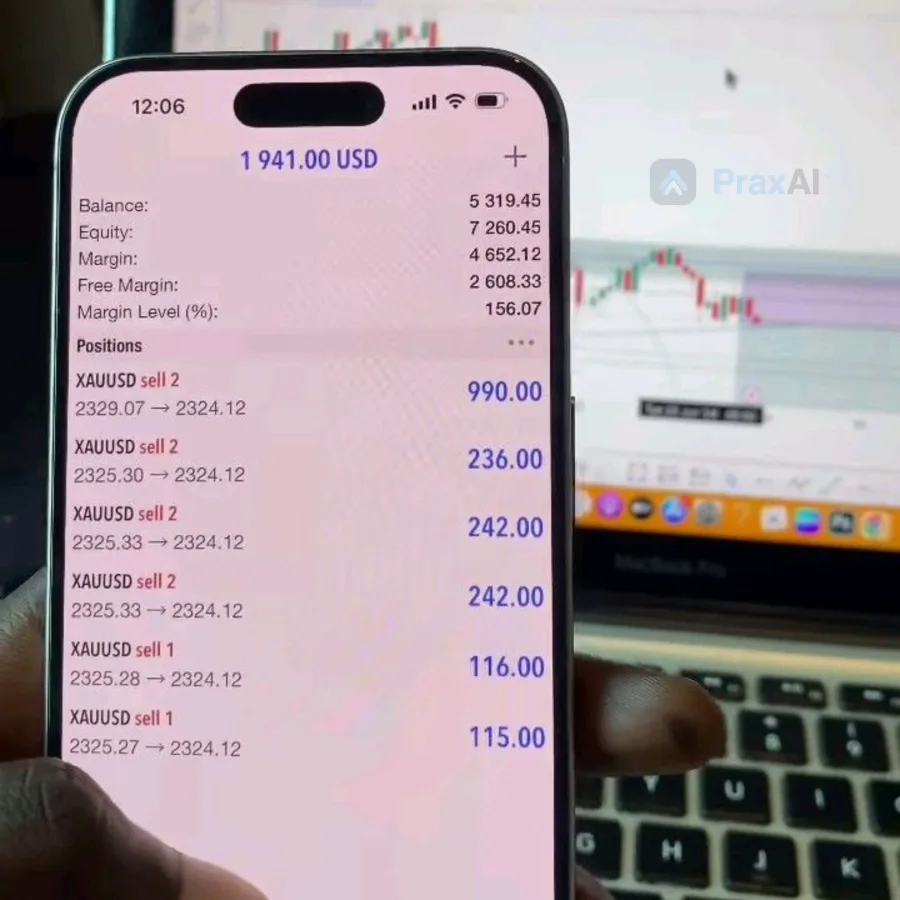
Are trading bots and EAs allowed by prop firms?
The single biggest question before automating. The short answer is mostly yes, but the details decide everything.
Read post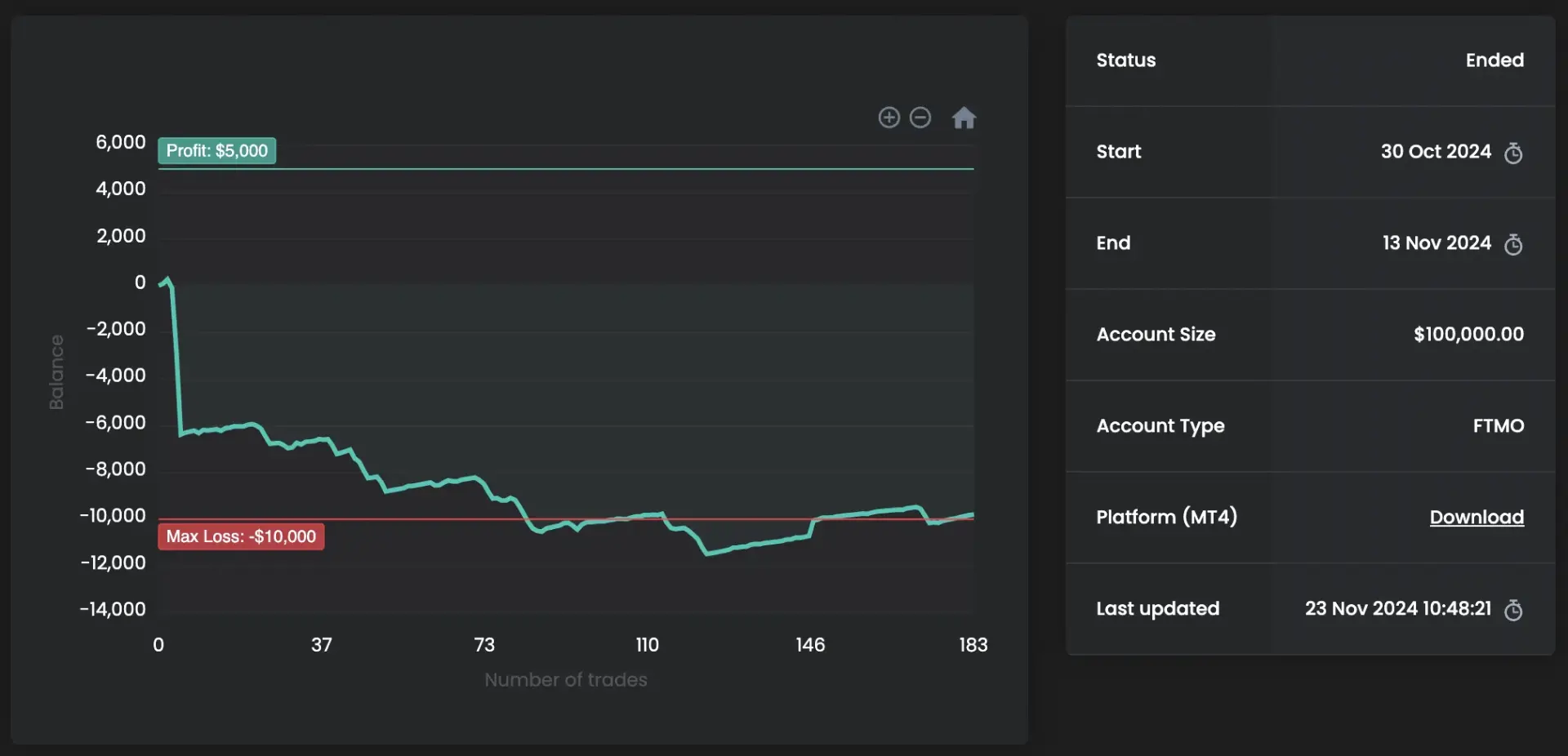
Daily loss vs max drawdown: the two limits that end most challenges
Two loss limits end almost every challenge, and they work very differently. Confuse them and you breach without seeing it coming.
Read post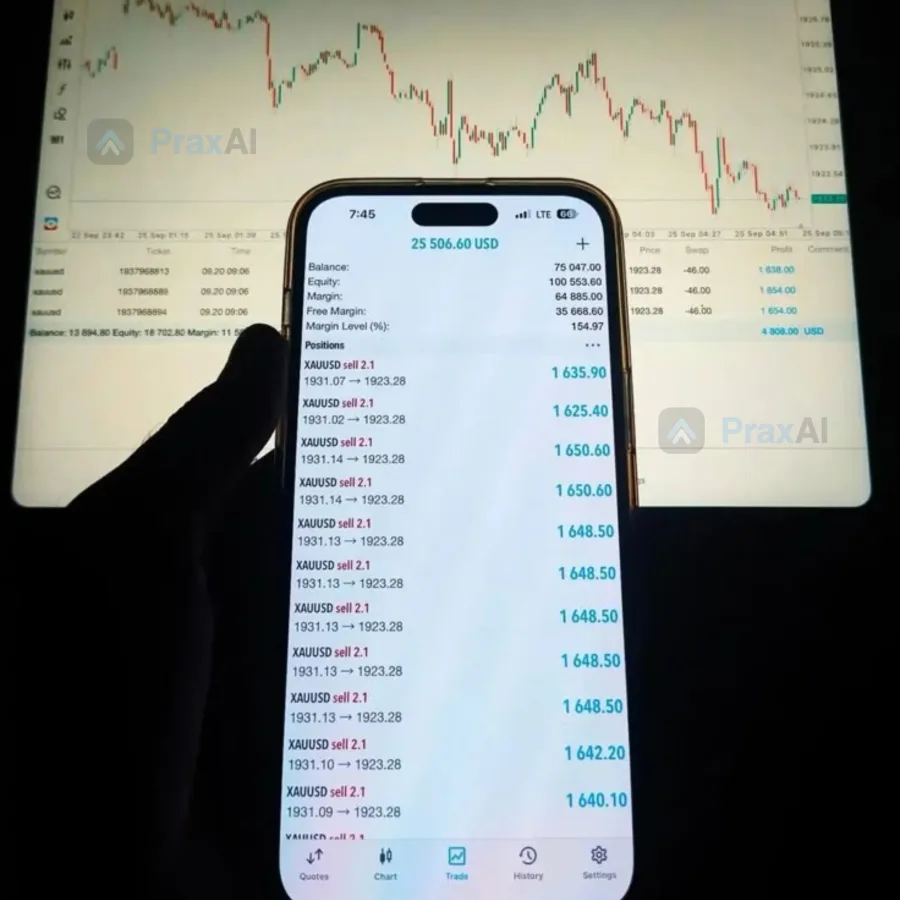
From signup to first payout: the realistic timeline
Challenge, verification, funded, payout. Here is what actually happens at each stage and roughly when.
Read postHow to actually pass an FTMO challenge in 2026
Most traders do not fail on bad trades. They fail on rule breaches. Here is how to trade inside the rules instead of fighting them.
Read post
Position sizing for a prop challenge: the 0.5% rule
The lot size you choose decides whether you pass more than the entries do. Here is the simple math.
Read post
5 mistakes that fail most prop firm accounts
The same handful of mistakes end the vast majority of challenges. Fix these and you remove most of the ways to lose.
Read postWhy automation beats willpower in prop trading
Discipline is a finite resource. A rule engine has an unlimited supply. That gap is why systems pass more challenges.
Read post
Manual trading vs automated EAs: what the numbers say
Discretion has its place, but for the narrow job of passing a challenge under strict rules, a rule-based system has clear structural advantages.
Read postTrading the news on a funded account: why the bot steps aside
High-impact news is where clean setups turn into worst-case fills. Here is why stepping aside beats trading through it.
Read postChoosing a prop firm for automated trading in 2026
Not all firms treat automation the same. Here is what to compare before you buy a challenge.
Read postHow to scale to multiple funded accounts without blowing up
One funded account is a start. Several, run correctly, is a business, if you do not wipe them all in one session.
Read postWhat .set files are, and why they make or break your challenge
A .set file is just saved settings, but it is the difference between a bot that respects your firm’s rules and one that breaches them.
Read post